
When Was the Drone Invented? The Story of an Invention
At Allumee, specialists in drone shows, we see drones as tools for artistic creation. Yet the history of drones began in a far less festive way. That’s why we invite you today to discover the fascinating evolution of this technology. The invention of the drone, from its utilitarian origins to its current role as a source of entertainment and wonder.
Who invented the first drone?
The origins of the drone are closely linked to the military needs of the early 20th century. One of the earliest pioneers of this technology was Achibald Low, a British engineer often referred to as the “father of the drone.” Low developed a craft capable of flying without a human pilot, controlled remotely via radio waves. The “Aerial Target” was intended to serve as a flying target for artillery training.
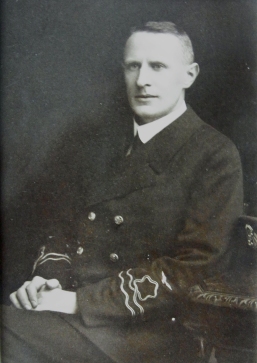
In the United States, Elmer Ambrose Sperry and his son Lawrence Sperry played a crucial role in drone innovation. Together with inventor Peter Cooper Hewitt, they developed automatic stabilization devices for aircraft, as well as systems for calculating altitude and distance. The goal of the “Hewitt-Sperry Automatic Airplane” project was to create an unmanned aircraft capable of autonomous flight, but above all capable of delivering an explosive payload to a specific location.
In France, Max Boucher, a military pilot, is recognized for his significant contributions to the development of unmanned aviation. He conducted pioneering tests. The precursor to the drone had a wingspan of 15 meters, was 10 meters long, and weighed 500 kg… The first successful flight, covering a few hundred meters, reinforced Max Boucher’s conviction that this was the right path to pursue, as he had already recognized its potential. His goal: to create a craft capable of carrying out reconnaissance missions without putting soldiers’ lives at risk.
When was the drone invented?
The first attempts to build drones took place during World War I, with prototypes developed as early as 1916 by Archibald Low in Great Britain. But it was in 1917 in France that Max Boucher truly marked the date of the drone’s invention—July 2, 1917, to be exact. He flew his “Voisin” aircraft unmanned for 500 meters at an altitude of 50 meters above the ground. The invention of the drone was officially recognized!
Historical Context
The development of drones is intrinsically linked to the military needs of the 20th century, which was marked by the two world wars. During World War I, the warring nations sought ways to improve their capabilities for reconnaissance of enemy territory while minimizing the risks to pilots. Gathering essential intelligence, conducting observation missions, and reducing human casualties. It was against this backdrop of strategic imperatives that the first drone experiments emerged.
What were the drones being used for at that time?
Used primarily for military purposes, their main role was observation, surveillance, and reconnaissance. Because they could fly without a pilot, drones were able to fly over dangerous areas and transmit vital information about enemy positions. Over time, drones evolved to perform other military functions, such as missile guidance. We’ll see later in this article that their functions subsequently shifted more toward recreational use.
The Evolution of Invention Through the Ages
1960s–1970s
Drones are becoming more sophisticated thanks to advances in electronics and communications. As a result, they are being used for extended surveillance, espionage, and intelligence gathering. Their applications remain primarily focused on defense, with drones becoming an essential tactical component. It’s always about strategy!
1980s–1990s
Advances in information technology and lower production costs are making drones accessible for new applications. In addition to military reconnaissance missions, drones are beginning to be used for search-and-rescue missions, environmental monitoring, and aerial photography. A whole new perspective on the terrain!
The 2000s and Beyond
The advent of sophisticated and now more affordable drones is transforming their use in the civilian sector. They are becoming essential tools for aerial photography, used by photographers and filmmakers, as well as for civilian surveillance during events such as protests. At the same time, drones are finding applications in a variety of fields, such as infrastructure inspection, environmental monitoring —particularly for forest fires —and even the delivery of packages or medications to inaccessible areas. A more peaceful use!
And today?
Today, drones are no longer the exclusive domain of the military. They have become versatile tools accessible to a wide audience. They have also established themselves as a popular hobby for individuals, albeit with very basic technology. Nevertheless, their use is strictly governed by specific regulations.
Drones now make it possible to create more creative projects. And Allumee creatively harnesses the full artistic potential of drones to produce light shows. These shows feature hundreds of synchronized drones and require meticulous preparation. On our website, you’ll find the different types of shows available, as well as the cost of a drone show.
At Allumee, only a military-style precision remains in our organization. Like stealth aircraft, our drones have taken on a festive spirit. We are constantly pushing the boundaries of innovation to deliver ever-more-spectacular shows, where art and technology come together to delight our audiences.