
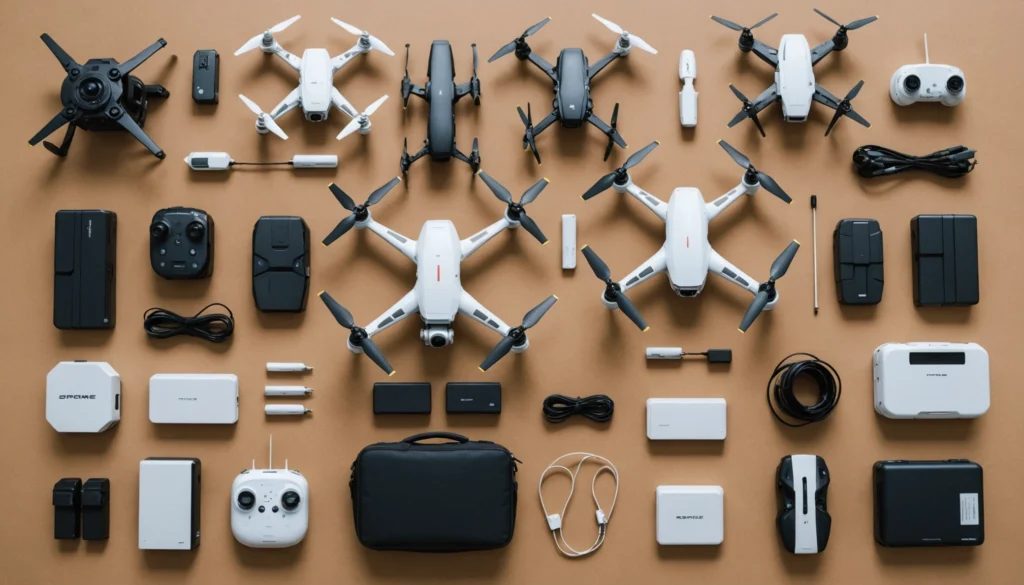
Drone Categories: Classification, Class, and Uses
European regulations—which have been in effect in metropolitan France since the December 3, 2020, decree on the operation of unmanned aircraft—distinguish three main categories: the open category, the specific category, and the certified category.
Every drone, from the DJI Mini to professional models, is labeled with a class designation (C0 through C6): This label, visible on the drone, summarizes its weight, technical requirements, intended uses, and authorized flight conditions. This also applies to drone shows.
Open Category: Recreational, Low Risk, Simplified Rules
The “open” category is intended for amateur drone pilots, recreational use, or anyone who wishes to fly without a cumbersome application process or complex certification. It primarily covers lightweight drones (less than 25 kilograms) that are operated without a pilot on board and used in low-risk scenarios (no flying over gatherings, line-of-sight flight, unrestricted airspace).
The DJI Mini 2, Mini 3, and DJI Mini 4 Pro drones, for example, often fall into the C0 category (weighing less than 250 grams), which is perfect for getting started or practicing model aircraft flying. It is therefore essential to strictly follow French drone regulations.
In the open category, online registration via the AlphaTango website is required for any aircraft equipped with a camera, even for Class C0 drones. Each pilot must create an account, obtain an operator number, and affix a class label and a direct remote identification (electronic tagging) if required by European regulations.
Moderate-risk operations, professional use, and standard scenarios
This specific category applies to drones operating under higher-risk conditions or in populated areas: aerial photography, mapping, technical missions, flights near infrastructure, commercial operations, flights over industrial sites, or professional missions in urban areas. Drones in classes C1 through C4—which may weigh more than 900 grams or be equipped with specific devices—require prior notification, an operating authorization, or even a risk assessment.
To fly in a specific category, you must complete theoretical and practical training, obtain a certificate of completion, present a pilot’s license, and comply with the standard procedures defined by the DSAC and the DGAC (the national civil aviation authority).
European operators must verify the compliance of each device, monitor its use, and document each operation. Regulations sometimes require the use of electronic identification and a more comprehensive registration procedure, tailored to the risks associated with its use.
Certified Category: Heavy Aircraft, Very High-Risk Operations, Crew on Board
The certified category, which is the most stringent, covers high-risk operations: the transport of people or cargo, military missions, manned flights, long-distance beyond-visual-line-of-sight operations, and drones weighing more than 25 kilograms. These aircraft must meet strict European requirements (EASA), including obtaining an airworthiness certificate, certification of a qualified pilot, specific training, a thorough operational assessment, and full compliance with national and European regulations.
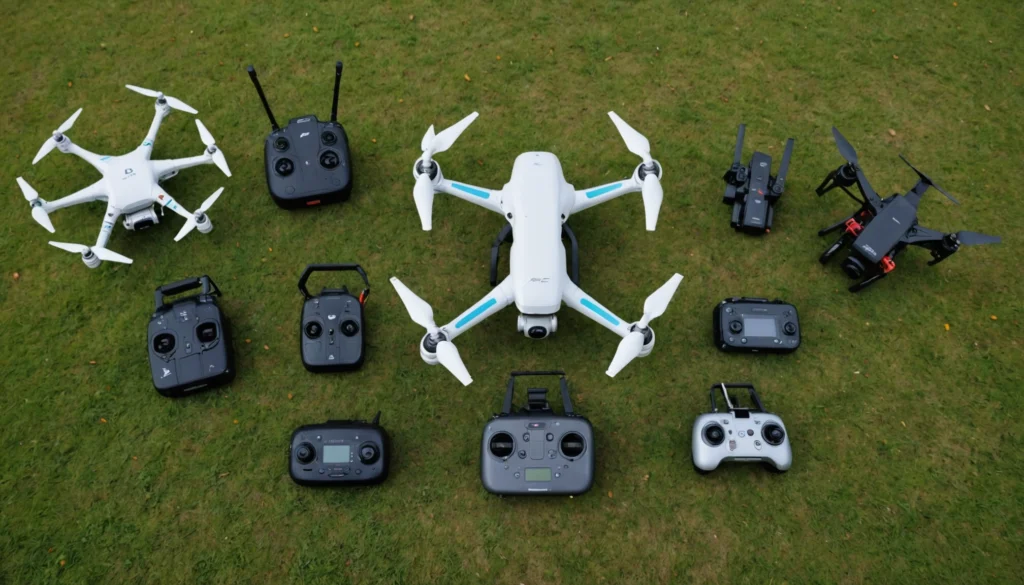
Subcategories: C0 through C6; each drone has its own class
Each drone category is divided into subcategories—C0, C1, C2, C3, C4, C5, and C6—based on maximum weight, intended use, type of operations, and built-in safety features. For example, a Class C1 drone must weigh less than 900 grams, be equipped with an electronic identification device, and comply with the maximum flight altitude (120 meters in France), whereas a Class C2 drone is permitted to fly in populated areas but requires a minimum distance from the public and proof of additional training.
These subcategories define the operating rules: visual or remote flight, maximum altitude, authorized airspace, standard or specific flight scenario, etc. A drone pilot must always verify the class and compliance of their drone, observe horizontal distances, flight restrictions (restricted zones, airports, sensitive public areas), and mapping requirements (geotagging via Géoportail).
Allumee: France’s leading provider of light drone shows, in full compliance with regulations
At Allumee, every light drone show is designed to amaze, but above all to strictly comply with European and French regulations. Before each operation, our team verifies each drone’s category (C0 to C6), its class designation, its registration on AlphaTango, the compliance of its electronic notification, and the site map via Géoportail. Our professional drone pilots complete online training and certified hands-on training, which includes an exam and a certificate of completion.
We tailor each show based on the location, the distance from the audience, the standard script, the weight of the aircraft, the maximum permitted altitude, and all safety requirements mandated by the DGAC. Whether it’s a large-scale show or a private event, every effort is made to ensure safe operations—from visual flight to aerial photography—without ever compromising on safety, privacy, or compliance with national and European regulations.
At Allumee, every drone show is an unforgettable experience… and fully compliant with regulations, from the permit application to the final certification.
Training, Registration, Certification: What Do You Need to Do to Fly Legally?
For each category and class, European regulations establish a set of basic requirements:
- Online theoretical training for the Open category (test and certification on AlphaTango, questions on safety, privacy, respect for others, and the use of airspace).
- Practical training and certification exam for remote pilots in the specific category (pilot certificate, remote pilot qualification, registration procedure with the DGAC, completion of self-study, and validation of skills).
- Registration of the drone on AlphaTango, affixing of the class label, and direct remote identification (operator number, registration process, registration certificate, mandatory class designation).
- Compliance with flight restrictions: no-fly zones, populated areas, public gatherings, maximum altitude, and national and European regulations.
In the event of an inspection, be sure to present your certificate of completion, your registration certificate, and all information regarding your aircraft, the flight plan, the mapping of the areas, and your qualifications as a remote pilot.
Some Examples of Applications and Practical Tips
Let’s take the example of an individual who wants to fly their DJI Mini drone in mainland France:
– Category C0: No pilot certificate required; simple online training; registration on AlphaTango; compliance with open regulations; and a prohibition on flying over people at a distance of less than 20 meters.
– Category C1: mandatory online training, electronic notification required, maximum altitude of 120 meters, flight within visual line of sight, obligation to respect privacy, and identification of the drone via a class label.
– Specific Category: For any flight near a sensitive area, you must submit an authorization request, conduct a risk assessment, complete practical training, obtain a certificate of completion, and submit an operational plan approved by the DSAC.
For professional operators or European business owners, the following will also be required:
– Comply with European regulatory requirements,
– Ensure that the crew on board (if any) is in compliance,
– Document each operation using a form or certificate,
– Check for regular updates to national regulations (decree of December 3, new scenarios, EASA regulations).
Risks, Penalties, and Best Practices
Any violation of drone regulations (failure to maintain required distances, flying outside authorized areas, failure to register, lack of a certificate, flying over sensitive sites or gatherings) is subject to penalties: fines, confiscation of the drone, suspension of the pilot’s license, or even criminal prosecution for endangering the lives of others. DJI drones, even the mini models, are no exception: every user must complete the appropriate training, observe altitude and distance limits, follow proper drone etiquette, and ensure the pilot is registered.
Tip: Always consult the official websites (AlphaTango, Géoportail) and national documentation, and stay up to date on changes to European regulations—especially if you are a commercial operator, a certified remote pilot, or a drone operator in a specific category.
Choosing the right drone means, first and foremost, complying with the regulations
Buying and flying a drone in France or Europe requires more than just common sense: you must know your drone’s category, comply with the requirements for that class, complete the proper training, complete the mandatory registration, fly only under authorized conditions, and always prioritize safety. Whether you’re an amateur or a professional, every flight must be conducted in accordance with the rules to ensure everyone’s safety and protect privacy.
Your drone—whether it’s a mini or a pro model—must always be flown in accordance with regulations; otherwise, you risk a fine or even worse.
Before every flight, check: Are you in compliance? Are your pilot qualifications and drone registration up to date? Are you complying with the maximum altitude, minimum distance, and restrictions? This is the key to fully enjoying your passion for flying… without any unpleasant surprises.
Our FAQs about drones
What are the three categories of drones?
In France, European regulations distinguish between the open category, the specific category, and the certified category. Each drone category is determined by risk, weight, operational scenario, and intended use (recreational or professional). Operators must comply with the rules, complete the registration process, and follow the regulations applicable to each class.
What are the four types of drones?
Drone classification generally distinguishes between Class C0, C1, C2, and C3/C4 drones. Each type corresponds to a specific use, weight, and operational capability. The operator must consult the category sheet, verify the class label, and comply with European regulations to ensure safety and compliance.
How can I find out what category my drone falls into?
To determine your device’s category, check the class label (C0 to C4), weight, intended use (recreational or professional), and registration status. The AlphaTango app, the DGAC website, or the DJI user manual provide information on classification, flight requirements, applicable regulations, and usage restrictions.
What does Category C1 mean for a drone?
A Class C1 drone must comply with specific European regulations: weight under 900 grams, use in the open category, compliance with electronic reporting requirements, flight within visual line of sight, maximum permitted altitude, a safety distance from people, and the requirement for an online training attestation or pilot certificate.
What category does the DJI drone fall into?
DJI drones are classified based on their weight and equipment: the DJI Mini is often classified as Category C0 or Open, the DJI Air as Category C1, and other professional models may fall into higher categories. European regulations require that each drone in use be registered and labeled with its class.
Is a drone allowed to fly over a residence?
Flying a drone over a residence or a populated area is strictly regulated by drone regulations. You must maintain the minimum distance, verify the drone’s category, obtain authorization if necessary, ensure privacy is respected, and check local restrictions on Géoportail or AlphaTango before any flight.