
What are the different parts of a drone?
Entertainment drones have revolutionized the way we experience artistic performances and outdoor events. These small flying devices, equipped with LED lights and cutting-edge technology, create large-scale visual spectacles.
To understand how these aircraft work, let’s take a closer look at their various parts. Here is a structured guide to the key components of a performance drone.
The Structure and Chassis
The structure, or frame, is the drone’s skeleton. As such, it supports all the other components and must be both lightweight and sturdy to ensure optimal performance.
As for the materials used, here are the two main ones:
- Carbon: Lightweight and durable, it is often used in high-performance drones.
- Reinforced plastic: Less expensive, but durable enough for standard show drones.
The Engine and Propellers
Entertainment drones typically use brushless electric motors. These motors are more efficient, durable, and offer better performance than brushed motors.
The propellers are responsible for the drone’s lift and maneuverability. They are often made of plastic or carbon fiber to reduce weight and improve durability.
The Flight Control System
The flight controller is, in a sense, the drone’s brain. It receives information from various sensors and adjusts the motors to maintain the desired stability and direction during performances.
Regarding the sensors:
- Gyroscopes and accelerometers that measure the drone’s movements while helping to maintain its stability.
- GPS: Used for precise navigation and to execute complex, preprogrammed movements.
The battery
Entertainment drones primarily use LiPo (lithium-polymer) batteries because of their high energy density and light weight.
In addition, battery life depends on several factors, including the drone’s weight, flight conditions, and the brightness of the LED lights.
The LED lighting system
As for the type of lighting, performance drones are equipped with RGB LED lights that can produce a wide range of colors and patterns.
As a result,these lights are controlled by the flight controller or through a dedicated system, allowing for effects synchronized with music or other drones.
Communication and Navigation Systems
Drones use radio-frequency communication systems to receive commands from the pilot on the ground. In short, they are ttechnologies that use radio waves to transmit information wirelessly.
For synchronized shows, drones can communicate with each other to coordinate their movements and lighting effects.
Finally,to avoid collisions, drones are equipped with proximity sensors (ultrasonic, infrared, or laser) that quickly detect obstacles.
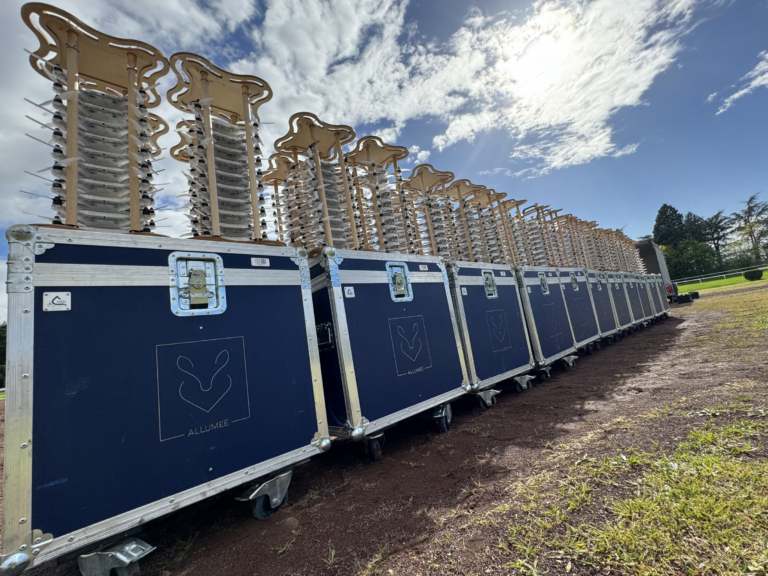
Entertainment drones are marvels of modern technology, combining advanced components to create captivating aerial performances.
By understanding the different parts of these drones, we can better appreciate the complexity and ingenuity behind each light show. Whether for sporting events like the Asics SaintéLyon race, or traditional festivals like the Fête du Citron in Menton, performance drones will continue to fascinate and amaze crowds around the world.